⚠ 24/7 Emergency Black Mold Removal in State College, PA — Call +1-844-578-1604 Now
Stachybotrys Certified Protocol — State College, PA

Stachybotrys Remediation
Specialists in State College, PA

Stachybotrys chartarum grows on consistently wet cellulosic materials — the paper face of drywall, wood framing after prolonged saturation, ceiling tile. It produces trichothecene mycotoxins that remain active in dead spores, which is why surface biocide treatment alone is not an adequate response. Our State College, PA crews remove the contaminated material entirely, treat remaining structural surfaces under full containment, and verify clearance with independent IH sampling.

Type III
Containment Protocol
N100
Respirator PPE
IH
Supervised Clearance
Licensed Black Mold Removal service in State College, PA - Cheap Mold Removal
01
😷
Full Tyvek & N100 PPE on Every Job
Full PPE on every crew member for every State College Stachybotrys job. N100 respirators, Tyvek, nitrile — no exceptions.
02
🔥
Type III Enhanced Containment
Double-layer polyethylene barriers, HEPA negative air machines, sticky mat decontamination stations at containment zone entry — established before any Stachybotrys-contaminated material is disturbed in your State College property.
03
✅
Material Removal — Not Surface Treatment
Stachybotrys mycotoxins are present in the material itself. EPA-registered biocides applied to contaminated drywall don't neutralize the mycotoxin-laden substrate — the material must be removed. We remove it completely. No shortcuts.
04
📄
IH-Supervised Post-Clearance Sampling
Every completed State College, PA Stachybotrys job ends with IH-supervised clearance sampling. Written IH report confirms completion objectively.
Black Mold Services — State College, PA

What Our State College Black Mold Team Does

Stachybotrys requires a higher standard of response than common surface molds. Each service below reflects the specific requirements of confirmed or suspected Stachybotrys chartarum in a State College, PA property.

Identification
🔍Species Confirmation via Lab Analysis
Dark coloring alone does not confirm Stachybotrys. Multiple mold species produce dark or black-appearing growth — Cladosporium, Aspergillus niger, Aureobasidium. Surface swab or tape lift samples sent to an accredited lab confirm the species before we apply the enhanced Stachybotrys protocol. Correct identification matters because it determines the containment tier, PPE level, and disposal approach.
Containment
🔥Type III Containment Establishment
Type III containment means double-layer 6-mil poly barriers floor-to-ceiling, HEPA negative air machines creating inward airflow verified by smoke pencil, sealed HVAC registers, and sticky mat decontamination stations at every containment entry. Established in full before any Stachybotrys-contaminated material is disturbed in your State College property — no exceptions.
Removal
🔨Complete Contaminated Material Removal
Contaminated porous material comes out completely. Double-bagged, documented disposal. No in-place treatment as a substitute for removal in confirmed Stachybotrys scenarios.
Treatment
💧Structural Surface Treatment & Encapsulation
HEPA vacuum, EPA fungicide, encapsulant — all remaining structural surfaces after material removal. Chemical treatment plus physical barrier as the standard, not the upgrade.
Drying
💨Moisture Source Identification & Correction
Stachybotrys only establishes on material that has been consistently wet for an extended period. Its presence confirms a sustained moisture source — plumbing leak, roof infiltration, chronic condensation, or ground moisture intrusion. We identify and document the source and provide specific corrective recommendations, because removal without source correction produces recurrence within months.
Clearance
✅IH-Supervised Post-Removal Clearance
Independent IH, not the remediation contractor, collects and interprets post-clearance samples. Written IH clearance report confirms the Stachybotrys removal achieved its objective.
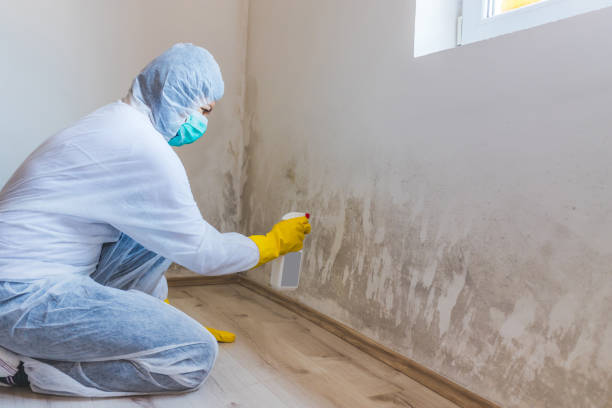
Professional Black Mold Removal technician working in State College, PA
How It Works

How Our State College, PA Black Mold Removal Process Works

Step 01
01
Emergency Call — 24/7 Dispatch
Live dispatcher answers 24/7. Priority routing for confirmed or suspected black mold in State College, PA.
Step 02
02
Species Confirmation & Containment
Lab confirmation, then Type III containment before the first material removal begins.
Step 03
03
Complete Material Removal & Treatment
All contaminated porous materials removed completely, double-bagged, documented disposal. Remaining structural surfaces HEPA-vacuumed, EPA fungicide applied, encapsulant sealed. Moisture source corrected or documented for correction.
Step 04
04
IH Clearance Sampling & Written Report
IH clearance confirms job complete. Written report suitable for insurance, real estate, and legal use in State College, PA.
24/7 Emergency Black Mold Removal experts in State College, PA
Client Reviews

What State College Property Owners Say About Cheap Mold Removal

★★★★★
Post-hurricane Stachybotrys in two rooms of our State College, PA home. Cheap Mold Removal established Type III containment, handled the full material removal and structural treatment, and produced an IH-supervised clearance report that our insurance adjuster accepted without any additional documentation requests. The containment was done correctly — no spore migration to the rest of the house.
Maria C.
State College homeowner
★★★★★
As a property manager in State College, PA, I've dealt with black mold complaints before. Cheap Mold Removal is the first contractor I've used who actually confirmed the species before applying the removal protocol — lab confirmation that it was Stachybotrys chartarum, not just dark-colored Cladosporium. Different removal protocol, properly applied. Clean IH clearance. Tenant returned to the unit with documented written clearance.
Principal T. Andrews
State College, PA school administrator
★★★★★
Post-remediation clearance testing after a previous contractor 'treated' black mold in our State College, PA property by spraying bleach and painting over it. Cheap Mold Removal's IH clearance sampling showed Stachybotrys spores still present above clearance parameters. That test report gave us the documentation to require the original contractor to redo the work properly.
Kevin P.
State College, PA property owner
Frequently Asked Questions

What State College Property Owners Ask About Stachybotrys

No. Many mold species produce dark or black-appearing growth: Cladosporium, Aspergillus niger, Aureobasidium, and Ulocladium are all common in State College, PA properties and all appear dark. Stachybotrys chartarum is identified by species-level laboratory analysis of a surface sample — not by color. The distinction matters because the removal protocol (containment tier, PPE level, disposal requirements) is determined by the confirmed species, and applying Type III Stachybotrys protocol to what turns out to be Cladosporium adds unnecessary cost, while applying a lower-tier protocol to confirmed Stachybotrys is an inadequate response.
Trichothecene mycotoxins survive in dead Stachybotrys cells. Biocide treatment kills the living mold but leaves mycotoxin-containing material in place. IICRC S520 specifies complete physical removal of all Stachybotrys-contaminated porous materials — not in-place treatment. Contractors who offer in-place biocide treatment for confirmed Stachybotrys aren't following the industry protocol.
Temporary relocation during Stachybotrys removal is our standard recommendation for households with vulnerable occupants. Type III containment protects unaffected areas of the property, but for high-risk occupants, temporary relocation during the active removal phase is the most protective approach.
Post-removal confirmation uses independent IH-collected air samples from the previously contaminated zone and outdoor comparative samples — analyzed by an accredited lab. Acceptable post-clearance parameters mean indoor Stachybotrys spore counts are at or below outdoor baseline levels in the treated zone. The written IH clearance report documents this comparison. We don't self-certify clearance — the independent IH provides the objective confirmation.
Stachybotrys needs continuous wetness on cellulosic material — not just humidity. Common State College, PA scenarios: chronic roof leak soaking wall assembly, plumbing leak inside a wall, basement flooding that wasn't dried fast enough, HVAC condensate on ceiling tile. Finding Stachybotrys means there was (and possibly still is) a chronic moisture source that needs to be identified and corrected alongside the mold removal.

Stachybotrys Removal Coverage — State College & All of State College, PA

Certified Stachybotrys removal with Type III containment protocol available for residential and commercial properties throughout State College, PA — including State College and surrounding PA communities. 24/7 emergency response for active situations.

Zip codes served: 16802 16803 16801 16804 16805

Call +1-844-578-1604 — Free Estimate

Confirmed or Suspected Black Mold in Your State College, PA Property?

Certified Stachybotrys specialists. Full containment. Written IH clearance report. Call +1-844-578-1604 now.

📞 Call +1-844-578-1604

Our Services in State College, PA

🟢 Techs On Duty in State College, PA Call +1-844-578-1604